
Braiding Sweetgrass by Robin Wall Kimmerer
Audiobook cover by Audible
Subtitled “Indigenous Wisdom, Scientific Knowledge and the Teachings of Plants, the book begins with sweetgrass. We learn how it grows, and how it is braided for ceremonial use. The author shares a story of a young man who tried to sell sweetgrass to an elder, who told him, “Sweetgrass is not to be sold.” This leads into a discussion of the divergent perspectives of gift economies and exchange economies.
Using her own experiences, Kimmerer illustrates the indigenous philosophy she was raised with. I enjoyed these many vignettes, and was drawn in immediately by the author’s evocation of wild fruit. When the world was young and time moved more slowly, I too gathered wild strawberries in June.
She reveals the intriguing relationship between goldenrod and asters, evoking their beauty before takeing us into the world beyond and behind appearances to reveal why these two wildflowers bloom together.
It behooves us to be grateful to our mother earth for all the gifts she provides. Rights and responsibilities need to be balanced for mutual benefit. This attitude is conveyed through the concept of honorable harvest: take only what you need. It also comes through powerfully in the traditional Onondaga Thanksgiving address recited at gatherings to prepare minds and hearts for the decisions that will be made. The verbal expressions of gratitude are powerful reminders of how we should think and behave towards our earth and its living forms.
Chemicalized farming and other industrialized processes bring a whole host of unintended consequences, and fail to show the proper respect for the earth that supports us all. The author describes for us the extensive damage visited on Onondaga Lake by such practices. Yet she shows how with the right mindset and effort, it is possible to restore even severely damaged ecosystems like Onondaga Lake. Many people work quietly at repairing the damage that humans have done to waterways, forests and wetlands. Kimmerer herself has reintroduced sweetgrass in places where it used to grow.
Moving seamlessly from scientific explanation to memoir to linguistic comparison and back again, the author focuses on what matters most. Earth gives us gifts of food, but we must do our part to receive them. Traditionally, we collected maple sap drop by drop with spile and bucket, then boiling down forty gallons of sap to make a single gallon of syrup.
Plants are sources of medicine, and Kimmerer’s book is filled with the wisdom of our foremothers, aboriginal and otherwise. The elderly Hazel is sure there “ain’t hardly any ills the woods ain’t got medicine for,” and the author’s mother has taught her, “there’s no hurt that can’t be healed by love.”
Her mention of the Iroquois Confederacy serves to remind Canadians that along with our British heritage, this organization of tribes remains a faint and largely unacknowledged pattern for the Canadian federation.
Beyond gratitude lies reciprocity. The lliving earth supports us and we support her in return. The life of one depends upon the life of all.
Combining the complementary wisdoms of science and aboriginal lore, this meditative and evocative book is a fascinating and inspiring read.
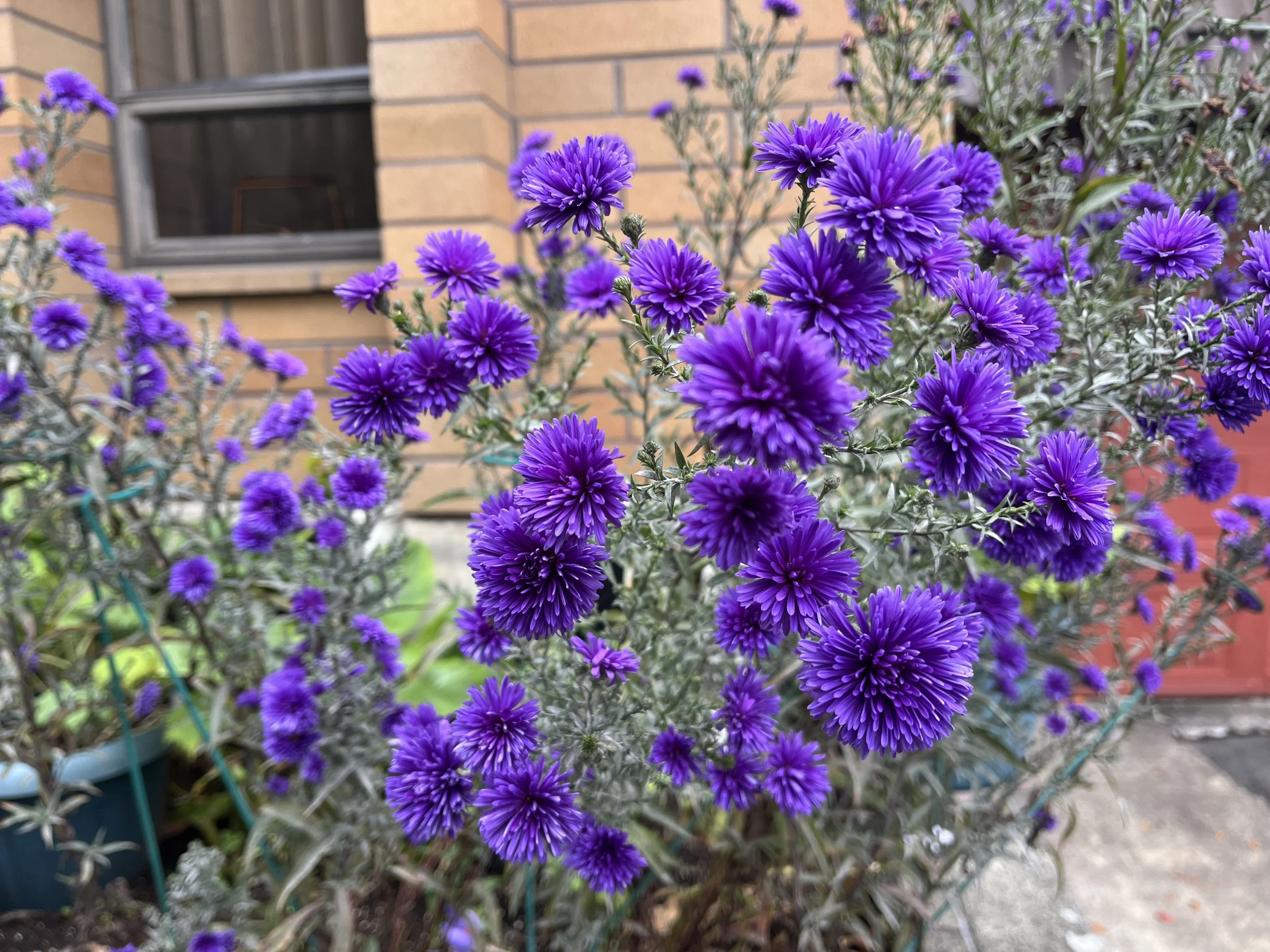
These volunteer asters in our front garden arrived when we added soil.
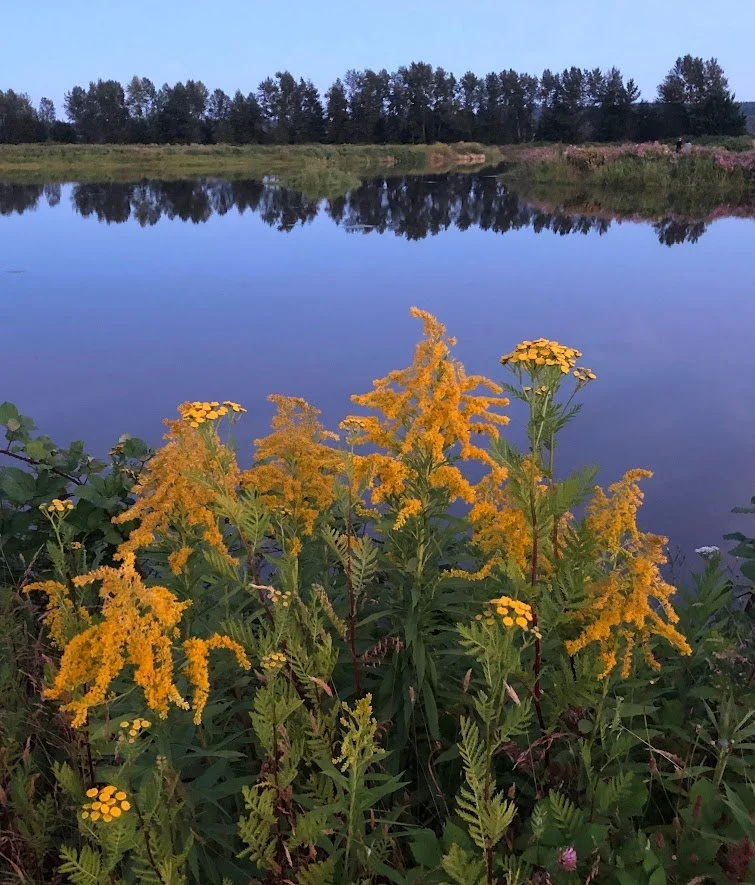
Goldenrod grows wild along the Serpentine dike, a favourite walk of mine